Biting into an apple should not be compared to receiving a warning shot. If you find yourself experiencing sharp, dull, or throbbing pain each time you chew, then your tooth pain when chewing could be a sign that there is something going on inside your mouth. It is one of the most prevalent issues that we see in our Baldivis dental clinic, and for a good reason, because chewing causes pressure on the teeth, gums, and nerves; hence, any underlying condition will become obvious during meal times.
In this article, we provide you with all the necessary information regarding tooth pain when chewing, including its causes, symptoms, distinguishing between non-emergency issues and emergencies, and possible treatment options. Consider it as a pre-dental appointment discussion.
What Does Tooth Pain When Chewing Actually Mean?
Short answer: Pain while chewing most often occurs due to the pressure of chewing affecting an inflamed tooth nerve, crack on the tooth, infection in the pocket between gums and tooth root or a loose filling, and requires a consultation and examination to understand the true cause.
A pain that is triggered by pressure and not caused by an infection inside the tooth is quite helpful for a dentist since this type of pain provides additional information about a patient’s condition and helps narrow down the cause during an examination.
Common Causes of Tooth Pain When Chewing
There are many factors that may lead to such a problem as tooth pain. Based on our clinical experience at Dental Studio Baldivis, there are several reasons why people have this symptom.
1. Tooth Decay or a Deep Cavity
When a decay starts eating through enamel and getting to the dentine of the tooth, pressure while chewing can affect an inflamed nerve. Early tooth decay can hurt when eating something sweet, but a large cavity hurts every time a person bites.
2. Cracked Tooth Syndrome
A hairline crack can be quite difficult to identify using X-rays; however, it is the most common cause of pain experienced during chewing but not after releasing the bite. It is termed as “cracked tooth syndrome” and usually occurs in the molar teeth that grind heavily.
3. Gum Disease and Periodontal Pockets
Gum diseases will lead to the weakening of ligaments securing the tooth in place. Once this is affected, pressure caused by normal biting may lead to pain, bleeding, halitosis, or gum recession.
4. Loose, Cracked, or Failing Fillings
A worn-out filling may pose weakness in the tooth. Biting on the side will exert pressure on areas least protected in the tooth.
5. Dental Abscess or Infection
Abscess is an infected area at the root tip, and it is quite a serious cause of chewing tooth pain. Apart from biting pain, you may experience swelling, bad taste, fever, or a pimple-like spot on the gum, which indicates infection that requires immediate treatment.
6. Sinus Pressure
Your upper back teeth are located near your sinus cavities. An infection in the sinuses can cause Tooth Pain When Chewing, especially when the discomfort is felt in several upper molars simultaneously, not a single tooth.
7. Teeth Grinding (Bruxism)
Teeth grinding and clenching during the night or day cause enamel erosion and wear on the jaw joint, resulting in a dull, generalized ache felt while eating.
Tooth Pain When Chewing: Symptom Comparison Table
| Symptom Pattern | Likely Cause | Urgency Level |
| Sharp pain on release of bite | Cracked tooth | See dentist within days |
| Pain in one tooth, worsens over weeks | Deep decay | Book soon |
| Swelling, throbbing, bad taste | Abscess/infection | Same-day / emergency |
| Pain across several upper molars | Sinus pressure | Monitor, see GP if persistent |
| Generalised jaw ache, worn teeth | Bruxism | Routine appointment |
| Bleeding gums, loose tooth feeling | Gum disease | Book soon |
What to Do When You Have Tooth Pain When Chewing
Summary: Stay away from chewing on that side, swish warm saltwater in your mouth, take any necessary over-the-counter pain medication, and schedule a dental appointment before your pain becomes constant.
Follow these steps until you have your appointment:
✅ Chew on the other side of your mouth
✅ Swish with warm salt water to clear out bacteria and comfort your gums
✅ Refrain from eating extremely hot, cold, or hard foods on that tooth
✅ Use a toothbrush with soft bristles near the sore spot
✅ Take over-the-counter pain medication as directed by the package
❌ Don’t overlook swelling, fever, or bad tastes in your mouth; this needs treatment right away
❌ Don’t try to repair your loose filling or crown
When Is Tooth Pain When Chewing a Dental Emergency?
Consider it an emergency case if you experience face swelling, fever, presence of an abscess, throbbing pain that prevents sleep, and pain after injury. Such symptoms indicate infections and injuries that may escalate if no prompt action is taken. Baldivis Dental Clinic provides emergency treatments for such cases without having patients guess throughout the weekend about what to do.
How Dentists Diagnose the Cause
Here at Baldivis Dental Clinic, Dr. Famysa Riyas and colleagues diagnose biting pain in a systematic way instead of immediately filling cavities. The process involves:
- Detailed history – onset of pain, factors causing it, and if it persists or is intermittent.
- Visual and tactile inspection of the tooth, gumline, and bite pattern.
- X-rays or 3D scanning of the teeth to look for any decay, fracture, or bone loss.
- Bite test using a small stick to locate the exact tooth or cusp involved.
With the latest diagnostic technology such as 3D scanning and digital smile designing, it is possible to detect cracks and incipient caries which could not be detected before with much greater accuracy, hence easier treatment.
Treatment Options for Tooth Pain When Chewing
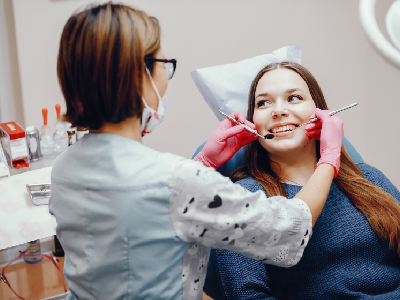
It all hinges on the root cause, and an honest dentist will always outline the reasons behind his recommendation first and foremost.
- Fillings – for decay that hasn’t penetrated the nerve
- Crowns – to reinforce a damaged or heavily treated tooth
- Root canal – if there is an infection or nerve damage involved, which takes out the source of the pain while preserving the natural tooth
- Gum treatment (scaling and root planing) – for treating periodontal disease
- Nightguards – a customized way of guarding the teeth from grinding-related pain
- Extraction – as a last resort when there is no way to save the tooth
Common Mistakes People Make With Chewing Pain
- Delaying dental visit until toothache is persistent problem
- Taking pain killers regularly for months instead of dealing with underlying problem
- Thinking sensitivity will “go away by itself” — some reasons are slowly developing
- Continuing chewing on sore side by force of habit and thus speeding up process
- Disregarding X-ray examination of your teeth as “nothing too serious” — many fractures and cavities are not visible to naked eye
Best Practices to Prevent Tooth Pain When Chewing
- Schedule dental examination twice per year so smaller problems could be detected earlier
- Use night guard if you grind your teeth, particularly when waking up with sore jaw
- Do not use teeth to open containers or shells
- Replace worn-out fillings and crowns before total failure
- Brushing and flossing consistently to prevent gum disease
Future Trends in Diagnosing Dental Pain
Dentists are increasingly using the technique of 3D images and digital smile design for detecting dental cracks and cavities which may not be picked up through traditional x-rays. This trend will lead to faster diagnosis and help dentists diagnose dental problems in patients who have pain while biting their teeth in one visit.
Conclusion
Chewing pain in your teeth should be seen as a signal that there is something wrong in your mouth before it turns into a serious problem. It can be anything ranging from cavities and cracks to the early signs of periodontal disease, but either way, getting it diagnosed through a comprehensive dental examination is usually the easier thing to do. If your chewing is now causing you discomfort, then it is time for you to visit the experts at Baldivis Dental Clinic to find out what is going on.
We provide such services as:
- Emergency dentistry
- General dentistry
- Restorative & advanced dental procedures
- Oral surgery & tooth removal
- Children Dentistry
- Aesthetic Dentistry
📞 Phone 08 9528 5555 or book online to make an appointment with Baldivis Dental Clinic now.
Frequently Asked Questions
1.Why does my tooth only hurt when I bite?
A localized pain that only occurs during biting normally means there is either a crack, a loose filling, or a cavity near the nerve, because chewing puts stress on the damaged area directly. It is unlike continuous pain, which usually happens due to an infection. The easiest and quickest way to diagnose the problem is a dental examination with X-rays.
2.Is it possible for a cavity to cause pain only while biting?
Yes, a cavity that gets close to the nerve may hurt during chewing only, especially if this specific tooth is under stress, and not cause any problems when biting stops. This condition is expected to worsen as time goes by without proper treatment.
3.Is tooth pain while biting always a serious issue?
No, it isn’t always, but it still should not be overlooked. Some pain during biting may indicate either tooth sensitivity or chipping, whereas a more regular and intense pain is a sign of an underlying problem.
4.When should I visit a dentist if I experience painful chewing?
If there is neither facial swelling, nor fever, nor sharp and constant throbbing pain, schedule your appointment in about a week’s time. In case you have noticed any facial swelling, any unpleasant taste, or worsening of the condition, it is considered an emergency and should be treated immediately.
5.Can sinus infections actually cause toothache during chewing?
Yes, mainly upper back molars are affected by sinus problems due to their proximity to the floor of the sinus. Toothache caused by the sinus is usually not localized but affects several teeth simultaneously, and gets better as soon as sinusitis subsides.
6.What will happen if I neglect the toothache?
If you neglect the problem, you let it go unchecked and unattended, which leads to its progression from a cavity or a chip to a more serious issue such as a root canal or even an extraction.