No one wants to hear “your tooth will have to come out,” but often, tooth extraction in Baldivis is the best method for safeguarding your oral health overall. Our dental clinic in Baldivis considers all other options first before recommending extraction. If extraction is recommended, however, it’s only done based on clinical considerations.
Here, we’ve listed the main reasons that dentists suggest tooth removal and explained the procedure itself. We’ll also highlight how the dental staff at Baldivis ensure patients are comfortable during extraction.
1. Extensive Tooth Decay That Cannot Be Treated
Tooth decay is the most common cause of tooth removal in Australia. In cases where the decay has extended beyond the surface layers of enamel and dentine and into the pulp, a simple filling or crown will likely not be sufficient.When a root canal cannot be performed due to the extensive nature of the decay, cracks in the tooth roots, or simply patient preference, removal may be the best choice to prevent further complications such as an infection spreading to other teeth.
Indications that your decay might be too severe to treat include:
- Painful, throbbing toothache
- Severely decayed tooth
- Abscess or swelling near the tooth
- Black discoloration in the tooth’s structure
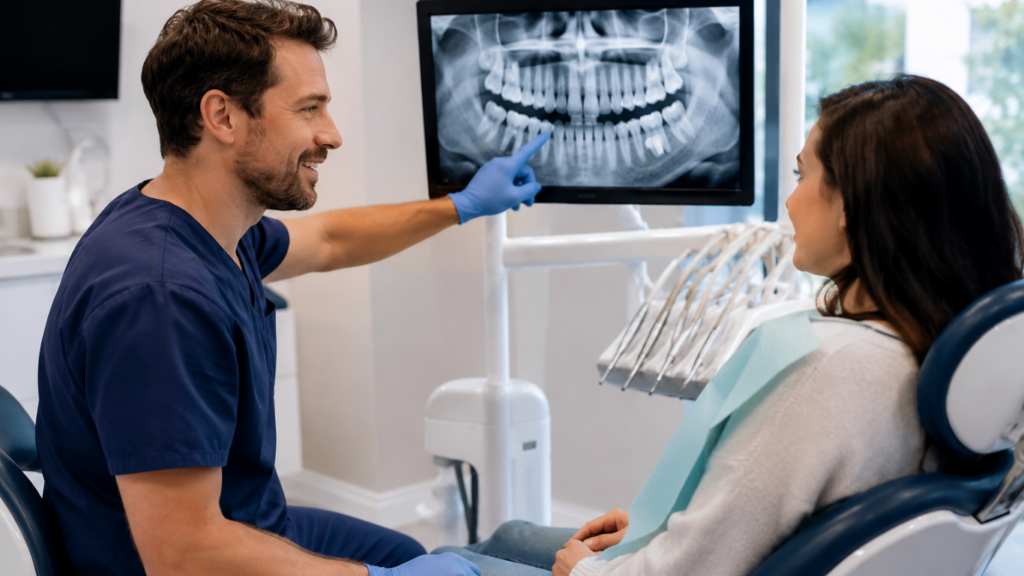
At our clinic in Baldivis, digital imaging will be used to determine how far the decay extends and whether extraction is necessary — leaving you with peace of mind that your tooth needs to be extracted.
2. Impacted or Troublesome Wisdom Teeth
Impaction is common among wisdom teeth (or third molars), which usually erupt between the ages of 17 and 25. Since not all people have jaws that can accommodate these molars, they commonly get impacted because there simply isn’t enough space in the jaw for them to fully grow.Wisdom tooth extraction in Baldivis is one of our popular dental services, but you won’tregret coming here because we can save you from:
- Excruciating pain at the back of your mouth
- Pericoronitis or inflammation of the surrounding gum tissue
- Crowding or displacement of adjacent teeth
- Damage to the roots of the neighboring molars
- Formation of cysts in the surrounding impacted tooth
Wisdom teeth that have only erupted partially can still pose risks due to their difficulty in being cleaned.
3. Advanced Gum Disease (Periodontitis)
Gum disease begins with gingivitis, which results in reddened, swollen, and easily bleeding gums. If left unchecked, it advances to periodontitis, where infection affects the bones and tissues holding your teeth in place.In cases where the bone structure is highly damaged, teeth tend to loosen and cause pain. In such instances, there is nothing much to save in terms of preserving your tooth, thus the need for tooth extraction to:
- Get rid of the underlying infection
- Prevent bacteria from spreading to other teeth
- Prepare the area for future implants or dental bridges
Bottom line? The importance of routine dental visits in Baldivis cannot be stressed enough as they help prevent situations such as these.
4. Dental Trauma or Crack/Breakage of a Tooth
Life has its moments — an accident, a dental injury due to physical activity, or a bite that is too much for the tooth to handle. If your tooth experiences trauma, it might get cracked or fractured in such a way that restoration will be impossible.
Extraction will be suggested if:
- There’s a crack in the root of the tooth
- Large sections of the tooth break off
- There is extensive damage done to the tooth’s blood supply
To sporting families in Baldivis, we highly suggest the use of dental guards to minimize the risk of dental trauma altogether.
5. Crowded Teeth Prior to Orthodontic Treatment
In cases where the reason for tooth removal has nothing to do with disease, but rather has everything to do with space. This often happens when you or your child is getting orthodontics (braces) and your dentist recommends that one or more teeth be extracted to make room.Crowded teeth prior to orthodontic treatment are a frequent procedure for:
- The jaw being too small for the teeth
- Tooth overlap or rotation
- Impaction of a tooth which obstructs proper positioning
6. Baby Teeth That Don’t Want to Fall Out
Sometimes, a child’s baby tooth just does not want to fall out on time. In such a case, when the baby tooth does not move away to give space to the adult tooth growing below it, the tooth may grow out of alignment. This could cost the individual a hefty bill in future when the need arises for orthodontic treatment.
It is an easy process to get the baby tooth extracted in Baldivis and have the adult tooth grow in the right place. At Baldivis Dental Clinic, this is done in an easy and painless manner.
7. An Infected Tooth That Reoccurs
There are teeth that, despite being treated, become persistent infections. When you have an abscess that continues to form despite root canal treatment, then it means that your tooth is unable to fight off bacterial invasion anymore.
When this happens, it’s best to remove the tooth rather than try to save it, since doing so would only make things worse. You’ll break the cycle of infection, and the tissues around it will be able to heal properly.
8. Treatment of Disease/Use of Radiation Therapy
Certain cancer therapies (especially radiation therapy for cancers of the head and neck or chemotherapies) require that the patient have certain teeth extracted prior to the initiation of therapy. This is because such therapies impair the body’s healing response following dental surgery.
Such an extraction procedure minimizes the chance of significant adverse effects – a process that involves the cooperation between your cancer therapy specialists and our dental practice.
What To Expect: Tooth removal at Baldivis Dental Clinic
The thought of getting your tooth extracted can seem daunting. This is how our process works:
Prior to the Procedure
- Comprehensive exam and digital x-rays
- Explain why extraction is required and alternative options
- Sedation and local anaesthesia options discussed
During the Procedure
- Your mouth will be thoroughly numbed (pressure but no pain will be felt)
- If it’s a simple extraction, the tooth will be loosened and then extracted
- In the case of surgical extraction (e.g. impacted wisdom teeth), an incision might have to be made into the gums
- This process usually takes from 20–45 minutes
Post-Procedure
- Detailed instructions for aftercare to ensure proper healing
- Recommendations regarding what to eat and what not to
- Follow-up visit to assess healing and discuss future dental restoration if necessary (dental implants, bridges, dentures)
We employ advanced procedures to ensure your maximum comfort during the process and quick healing afterwards.
After Removal: Options to Replace Your Teeth
It’s not necessarily the end of the road to lose a tooth. Here at Baldivis Dental Clinic, we offer a few alternatives for replacing your teeth after extraction, such as:
- Dental implants – considered a long-term tooth replacement method that resembles a natural tooth both in appearance and performance
- Dental bridges – one of the most efficient fixed solutions which use adjacent teeth to span the gap
- Dentures – removable replacement for several missing teeth
We will recommend you the ideal course of action depending on your needs, timeframe, and budget.
Toothaches Are Not Ignorable: Visit Baldivis Dental Clinic for An Assessment
The key factor here: the sooner your dentist becomes aware of any problems, the better your chances of being able to treat it in less drastic ways. In many cases, extraction could’ve been prevented had it not been for the procrastination.
Should you feel any toothache, increased sensitivity, swelling, or if someone recommended you extraction, then you’d better come to see our specialists in Baldivis for professional advice.